Account


Here’s What Not to Do With Wagyu
Eight cooking mistakes you might not even know you’re making.
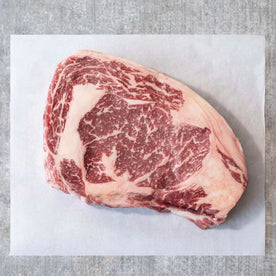
We spend a lot of time talking about what makes Wagyu different: the marbling, the genetics, the years of care that go into every animal. Because it’s so premium, it’s a cinch to cook—but you can definitely still screw it up. Here are the eight biggest mistakes people make when cooking it. The good news is that every one of these is easy to fix once you know to look for it.
1. Cooking it straight from the fridge
A cold steak cooks unevenly. The outside overcooks while the center struggles to catch up, and you end up with a gray band around a barely warm middle. Pull your beef out of the refrigerator 15 to 45 minutes before it hits the pan.
One Wagyu-specific note: Don’t overdo it. Wagyu fat begins to soften at a much lower temperature than conventional beef fat, which is part of what makes it melt so beautifully on the palate. If you let a Wagyu steak sit out for too long, that fat starts softening before you’ve even lit the burner.
2. Searing wet meat
Water is the enemy of a good crust. If the surface of your steak is damp when it hits the pan, the heat spends its energy boiling off moisture instead of browning the meat, and you steam your steak instead of searing it. Pat every surface dry with paper towels right before cooking. If you salted ahead of time and moisture has beaded up, pat it dry again.
3. Overcooking it
This is the most expensive mistake on this list. Every degree past medium squeezes moisture out of the muscle and, in the case of Wagyu, renders away the very fat you paid for. That marbling is designed to melt gently and baste the meat from within. If you cook it to well-done, it melts right out into the pan.
Because Wagyu is so richly marbled, it also tastes and feels more done than it looks. A Wagyu steak pulled at medium-rare has a texture that conventional beef doesn’t reach until medium. When in doubt, pull it off early. You can always return an undercooked steak to the pan, but there’s no rescuing an overcooked one.
4. Guessing instead of measuring
We know all the tricks for judging doneness—the poke test, the palm-of-your-hand trick, the timer on your phone—but they are all just guesses. A $15 instant-read thermometer is the single best investment you can make in your cooking. Pull steaks about 5 degrees below your target temperature, because the meat keeps cooking after it leaves the heat. For medium-rare, that means coming off around 125° F and coasting up to 130° F while it rests.
5. Slicing it too soon
Rest your meat. Slicing into a steak straight off the heat sends all those hot, agitated juices straight onto the cutting board. Give a steak 5 to 10 minutes under a loose tent of foil. Give a roast or brisket considerably longer. The payoff is that the juice that stays in the meat, where it belongs.
6. Cutting with the grain
Look closely at a cooked steak and you’ll see the muscle fibers running in one direction, like the grain in a board of wood. Slice parallel to those fibers and every bite is a bundle of long, chewy strands. Slice across them and you shorten the fibers, which your teeth read as tenderness. This matters most on cuts like flank, skirt, and brisket, where the grain is pronounced, and note that on some cuts the grain changes direction partway through. Adjust your knife as you go.
7. Panicking at the stall
If you’ve ever smoked a brisket, you’ll remember that panicky moment. The internal temperature climbs steadily, then somewhere around 150 to 165°F it just stops. For hours. First-timers assume the fire died or the thermometer broke, then crank the heat and dry out the meat.
The stall is normal. As the meat heats up, moisture rises to the surface and evaporates, cooling the brisket exactly the way sweat cools you on a hot day. Your two options are patience or a wrap. Waiting it out builds more bark, and wrapping in butcher paper or foil traps the moisture, stops the evaporative cooling, and pushes the temperature through the stall faster. Either way, the worst move is turning up the heat in a panic.
8. Burying it in sauce
A heavy marinade or a ladle of sauce can be the right call for lean traditional beef. On Wagyu, it can cover up all that beefy flavor. The flavor lies in that intramuscular fat, and it needs only coarse salt, fresh-cracked pepper, maybe a clove of garlic in the pan. Cuts like flank steak do hold marinades well, but choose wisely (read: lightly) and opt for one based in soy sauce.
Have a question of your own? Email us at support@miraflorawagyu.com. And if you’re ready to put good technique to work on great Wagyu, our online store is always open.
More blog posts

Weeknight Wagyu Stroganoff
A pantry-friendly stroganoff from influencer Josh Franks that turns a pound of Miraflora sirloin into dinner in about 30 minutes.

Why We Sell Out
If you’ve visited our shop lately and found your favorite cut marked “sold out,” you're not alone.

The Best Wagyu in America Starts in Japan
Our genetics set Miraflora Wagyu apart from the herd.